Case1
National Institute of Information and Communications Technology (NICT) G-ZERO L1 Case Study

The Resilient ICT Research Center at the National Institute of Information and Communications Technology (NICT) is, as its name suggests, a research division working toward communications that never go down. We spoke with Mr. Takeshi Sato, Research Technician at the center's Sustainable ICT System Laboratory (right in the photo), and Mr. Kota Kido, Chief of the Manufacturing Group in the Radio Use Management and Manufacturing Office, Planning Department, who supports prototyping across NICT (left in the photo), about the realities of the research floor and why prototyping matters.
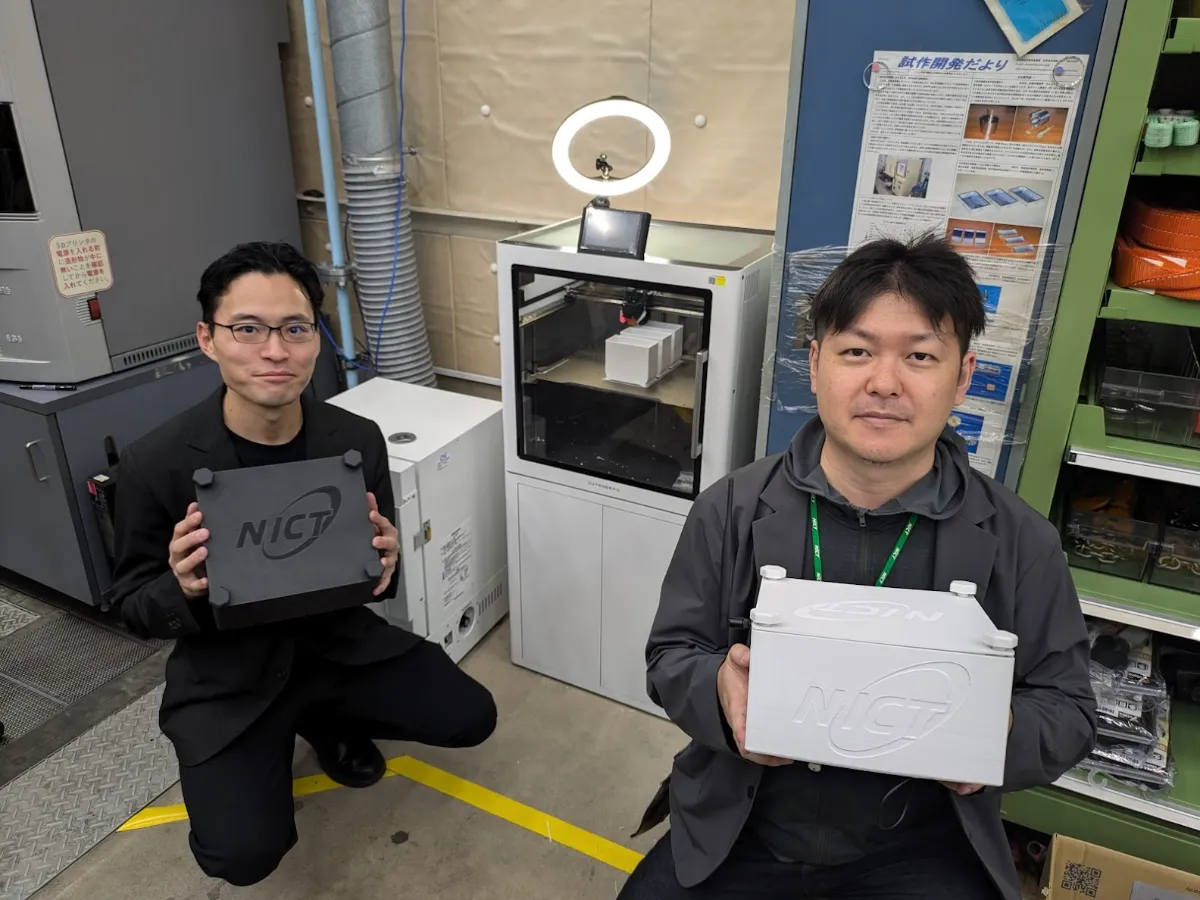
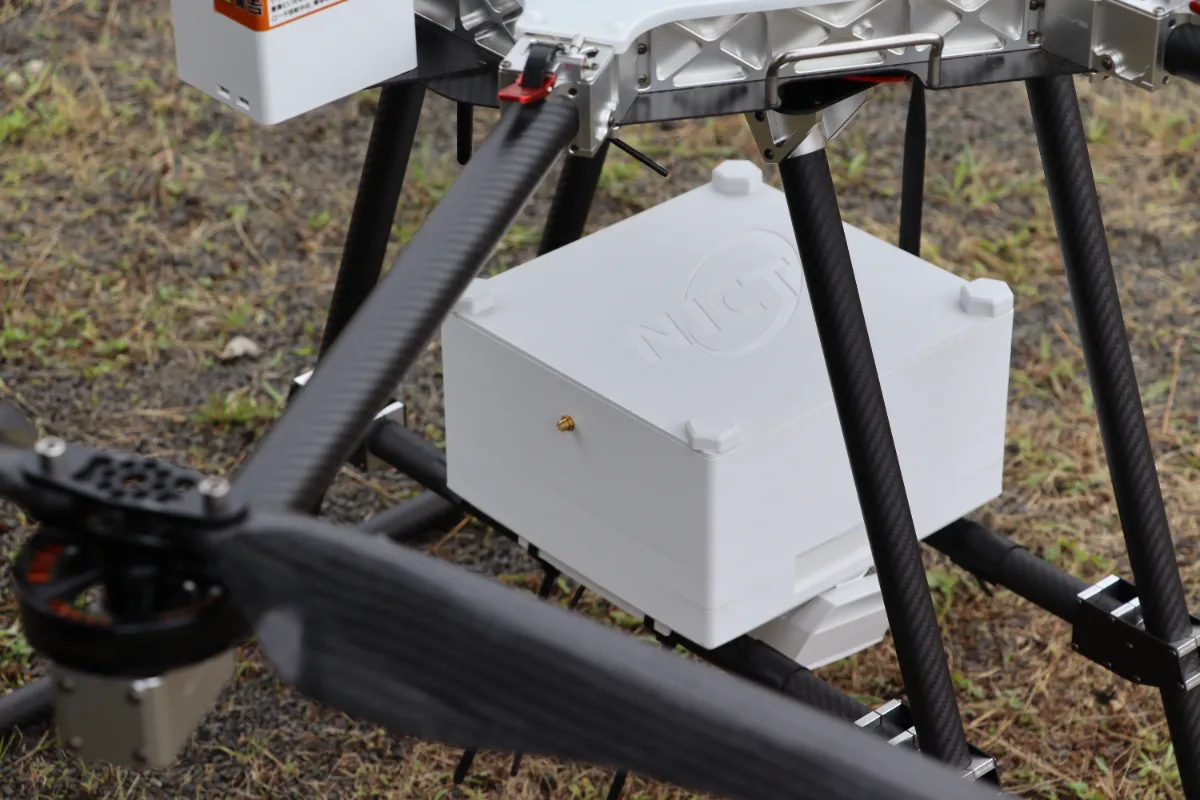
The Resilient ICT Research Center traces its origins to the Resilient ICT Research Center for Disaster Mitigation, established within Tohoku University in 2012.
Launched in the wake of the Great East Japan Earthquake as a base for research into disaster-response communications technology, the center was renamed to its current form around 2021.
"We were originally based in Sendai, but as our projects under SIP (the Cross-ministerial Strategic Innovation Promotion Program) progressed, there were more and more situations where a Tokyo base made better sense," says Mr. Sato.
Today the center works primarily in the Tokyo metropolitan area, advancing the development and field validation of disaster communications technology.
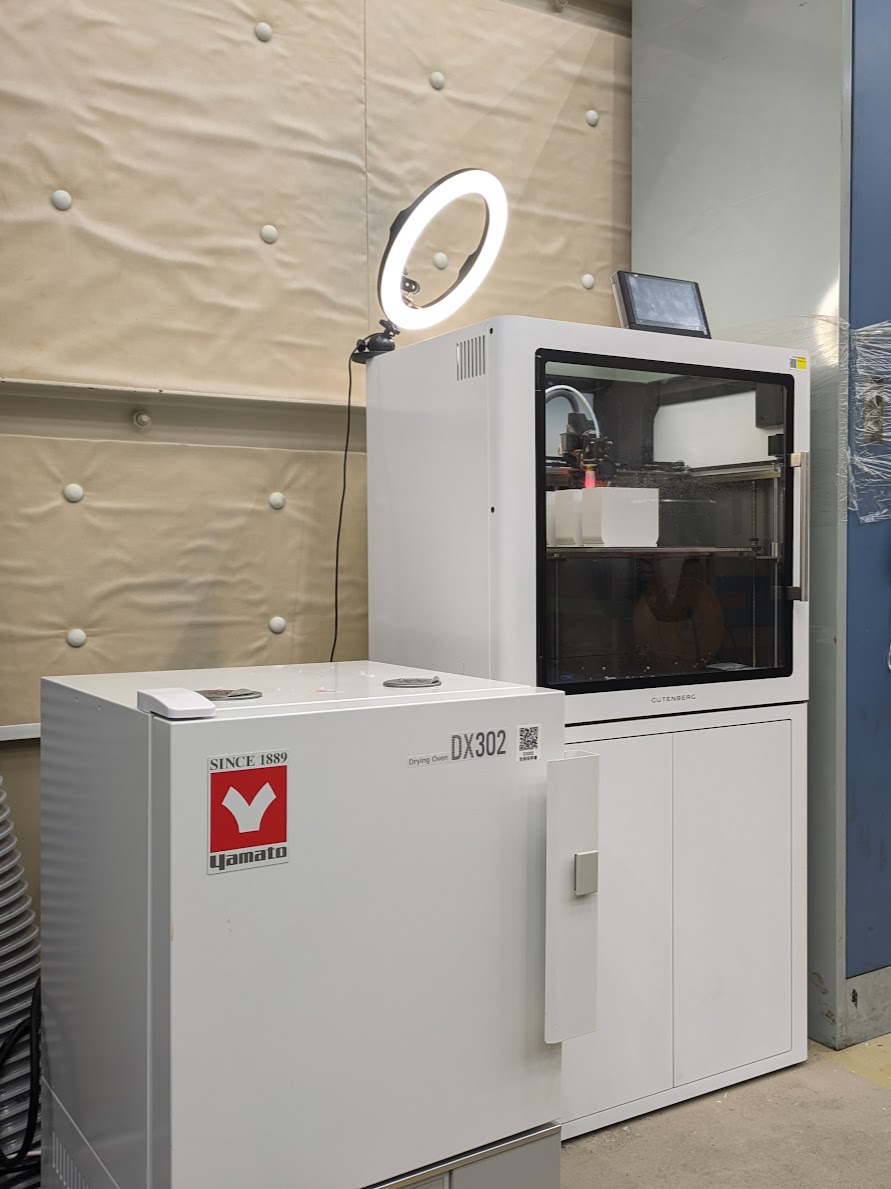
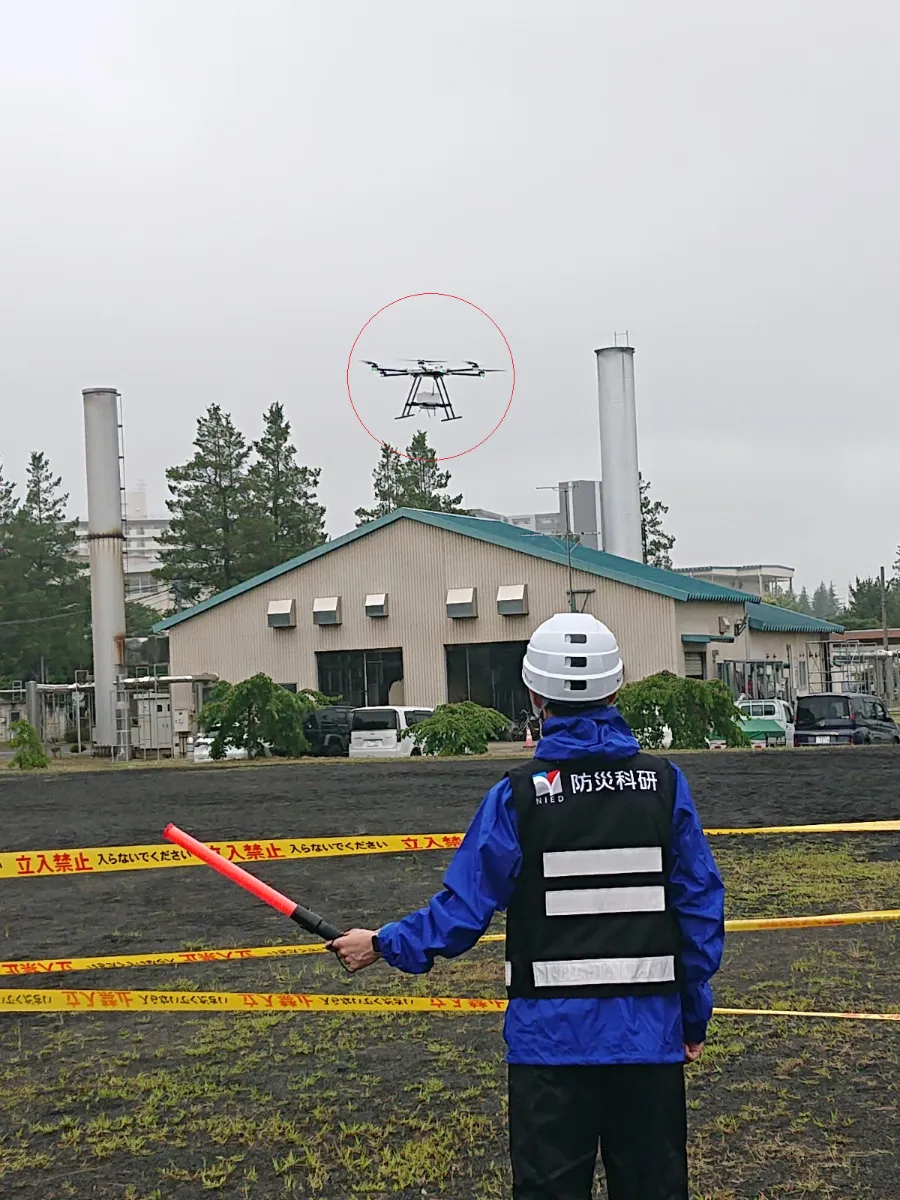
The center's research theme is developing the technology that keeps communications running at a disaster site. Communication equipment is mounted on drones and vehicles, and networks are built by combining the air and the ground.
This extends coverage across a disaster-stricken area and provides data transmission and server functions.
"These are designed on the assumption that the primary users will be the organizations that actually respond to disasters — the Self-Defense Forces, the police, the fire services. NICT is actively proposing ways to build validation elements into disaster drills from the technical side."
The role Mr. Sato holds — research technician — is essentially a bridge between research and implementation. "Our work focuses less on exploring basic theory and more on how something can actually be used in society. By iterating on prototypes, we can bring research results closer to practical deployment. With a 3D printer, an idea we discussed today can be modeled the same day and exist as a physical object by the next morning. That kind of speed matters enormously."
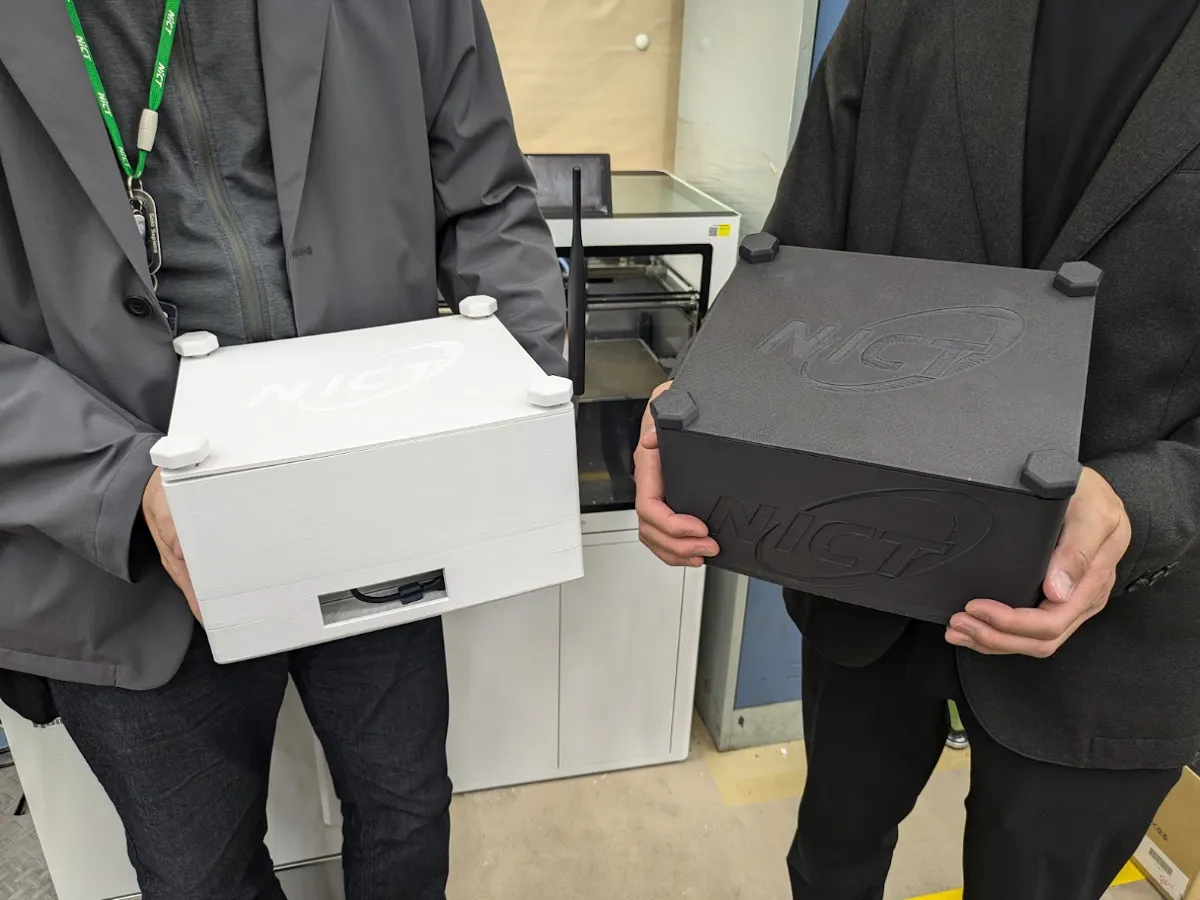
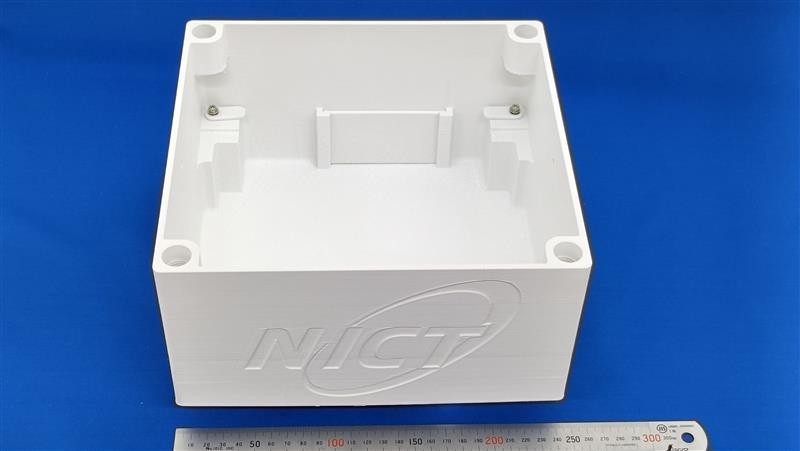
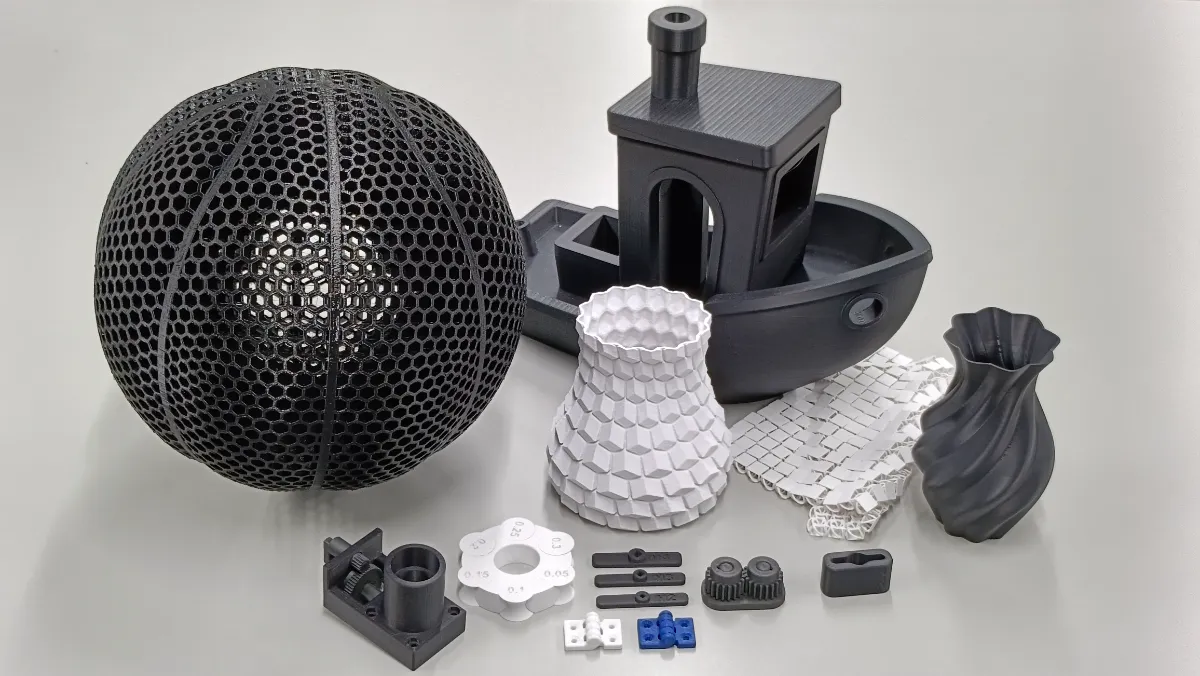
Mr. Kido describes himself as putting the 3D printer through its paces. Ten months after installation, cumulative print time has passed 1,539 hours.
One job — a sphere built from an intricate lattice structure, printed in TPU — ran for more than two days straight, and came out successfully.
"Set it up on Friday and it's done by Monday. That's routine for us. Our usage has more than doubled compared with before we installed it," says Mr. Kido.
The prototypes include housings for drone-mounted communication equipment and sensor holders used inside MRI machines. "Depending on the device, we may need to carry server functions or batteries, so weight reduction and center-of-gravity design become important. When we think of a fix for a problem that came up in the field, we can act on it immediately."
As a national research institute, NICT operates under strict rules for budget execution and procurement.
"Outsourcing takes at least a month, from drafting the specification through internal approval, bidding and contracting. And if there is even a small error in the specification, you start over. Research technicians like us spend our resources on work that will withstand an audit, and on nailing down the details so nothing has to be redone. Agile development normally wasn't an option for us, precisely because of that rework risk," says Mr. Sato.
Development proceeds in a waterfall model, and outsourcing a system can take as long as six months just to place the order.
"Beyond simply speeding up development, I feel it is critically important to build a prototyping environment that can be completed inside NICT, so that we can make the most of the resources we have."
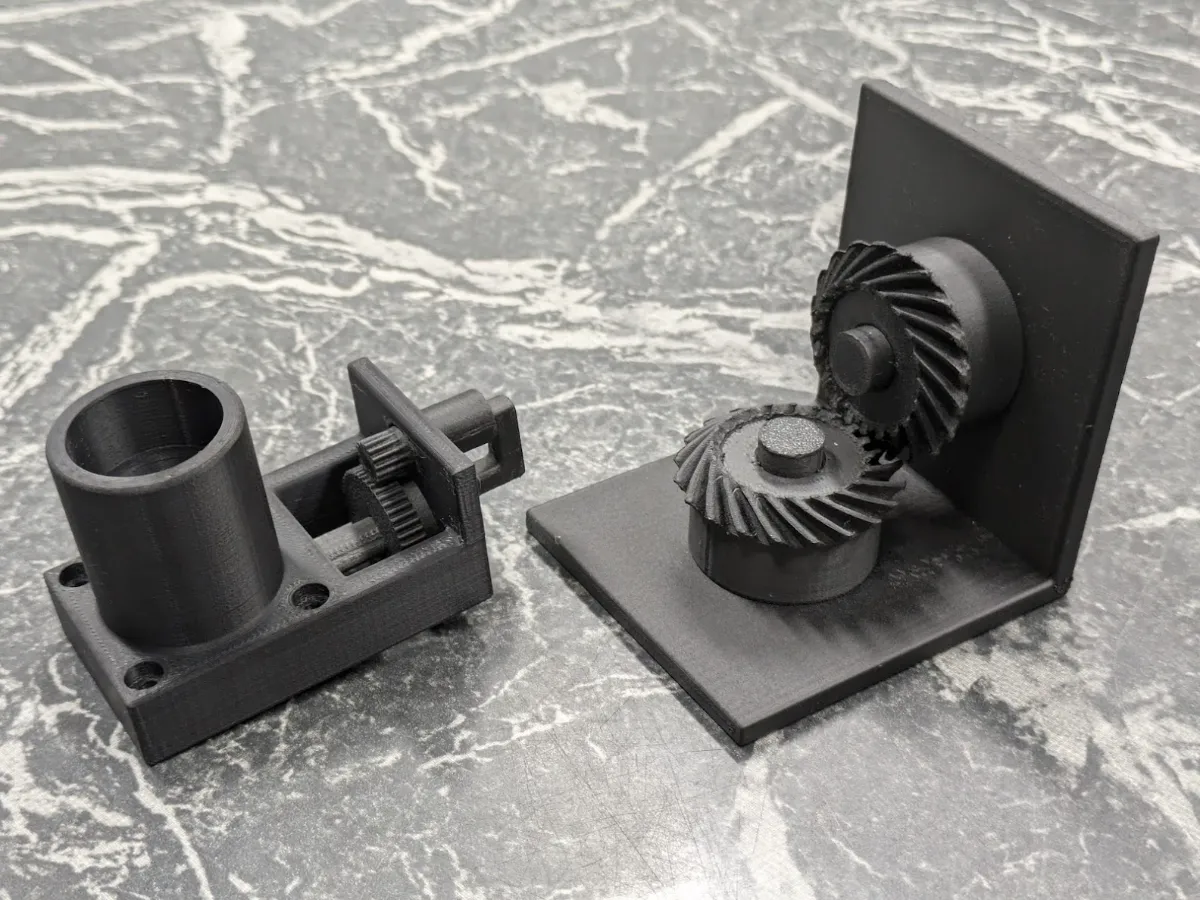
Asked about what comes next, Mr. Kido pointed to high-performance resins.
"We want to work with materials that can handle special environments — cryogenic temperatures, chemical cleaning. If we can also produce moving mechanisms and load-bearing parts by 3D printing, the scope of our research widens further."
The center is also gradually increasing its outward communication, including an exhibit at CEATEC. "We don't usually do much in the way of publicity, but we'd like to work with other research institutes and carry this through to real-world implementation."
The Resilient ICT Research Center carries a social mission: communications when disaster strikes. Behind the scenes, a steady, hands-on practice of making things to suit the field is taking hold.
Research and implementation, connected with real speed. Mr. Sato, Mr. Kido and their colleagues are already moving on to the next challenge.
Learn more about the G-ZERO L1
Product details

Contact / Quote





© Gutenberg Co., Ltd. All rights reserved.